


How can AC low-voltage cabinets achieve "precise scheduling" of power distribution in complex industrial environments?
Release Time : 2025-11-27
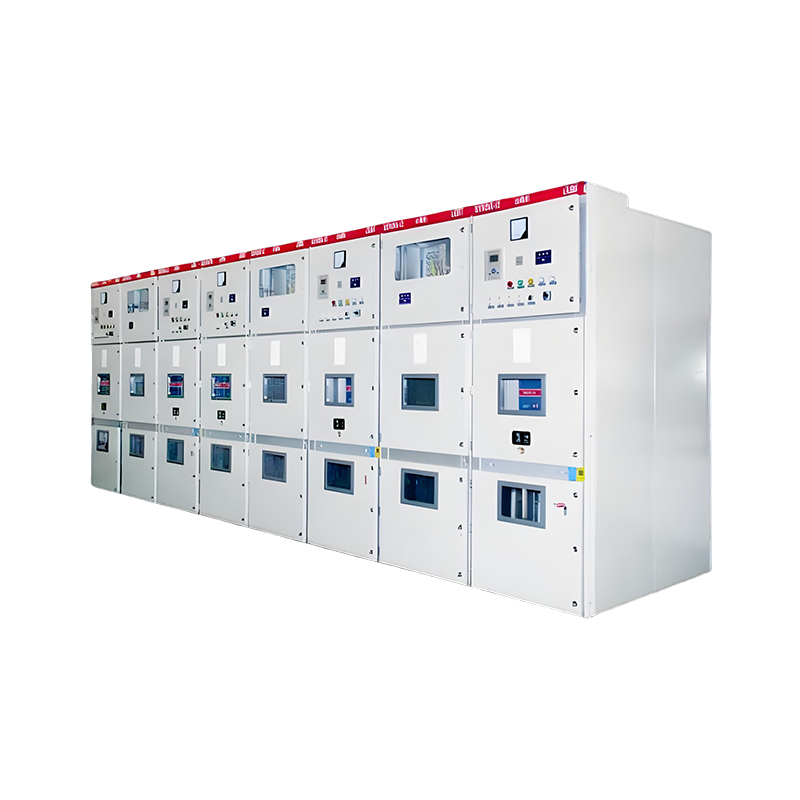
In power-intensive locations such as power plants, substations, large factories, mines, and enterprises, power systems not only have large loads and numerous devices, but also operate under complex and variable conditions. How to safely, efficiently, and flexibly distribute up to 3150A of power to various power, lighting, and control equipment within a 380V/50Hz low-voltage distribution system has become crucial for ensuring production continuity and energy efficiency. The GGD-type AC low-voltage cabinet, as a representative of the new generation of low-voltage switchgear, leverages its high breaking capacity, flexible electrical solutions, and intelligent potential to build a reliable, precise, and adjustable power "precise scheduling" system in complex industrial environments.
1. High Breaking Capacity and Strong Stability: Laying a Solid Foundation for Precise Scheduling
Industrial sites often experience sudden current surges due to motor start-up and shutdown, short-circuit faults, or lightning strikes, placing extremely high demands on power distribution equipment. The GGD low-voltage switchgear utilizes a high-quality cold-rolled steel plate structure, coupled with high-strength insulating support components, ensuring long-term stable operation under a rated current of 3150A. Its main busbar system is optimized for excellent dynamic and thermal stability, capable of withstanding short-circuit current surges up to 65kA without deformation. Simultaneously, the high-performance frame circuit breaker within the cabinet possesses precise overload long-delay, short-circuit short-delay, and instantaneous protection three-stage tripping characteristics, enabling fault identification and selective disconnection of faulty circuits within milliseconds, preventing widespread power outages caused by cascading tripping, and providing a robust safety barrier for precise dispatching.
2. Modular Design and Flexible Solutions: Achieving Customized Dispatch Based on Demand
Different industrial scenarios have significantly different power distribution requirements: power plant auxiliary systems require highly reliable dual-circuit power supply, mining equipment emphasizes dust and explosion protection, while smart factories require reserved automation interfaces. The GGD switchgear adopts a standardized modular structure, with drawer units or fixed intervals that can be freely combined according to user needs, supporting mixed installation of various functional modules such as power supply, dual power switching, reactive power compensation, and motor control. For example, lighting circuits, inverter power supply circuits, and PLC control power supply circuits can be integrated into the same cabinet, with parameters set separately through independent circuit breakers, achieving "multi-functionality in one cabinet and zoned management." This high degree of flexibility means that power distribution is no longer a "one-size-fits-all" approach, but truly "tailor-made" according to load characteristics.
3. Optimized Structure and High Protection Level: Reliable Operation in Harsh Environments
In dusty mines, humid power plant boiler rooms, or chemical plant areas with corrosive gases, ordinary distribution cabinets are prone to insulation degradation or even short circuits due to dust accumulation and condensation. The GGD type low-voltage cabinet has an IP42 or IP54 enclosure protection level, effectively preventing the intrusion of solid foreign objects and splashing water; the top of the cabinet has ventilation and heat dissipation holes, and the bottom has reserved cable entry and exit channels, taking into account both heat dissipation and sealing. The novel front and rear door structure facilitates maintenance, while the vertical busbar adopts an "L" or "U" shaped layout to reduce eddy current losses and improve conductivity. These detailed designs ensure accurate power dispatching even under harsh operating conditions.
4. Towards Intelligence: Providing Upgrade Space for Future Precise Control
While traditional GGD cabinets are primarily manual, their strong structural compatibility allows for easy installation of intelligent monitoring and control units. Connecting to SCADA or energy management systems via RS485 or Ethernet interfaces enables real-time monitoring of voltage, current, power factor, and energy consumption in each circuit, achieving load analysis, energy efficiency optimization, and fault early warning. For example, the system can automatically identify inefficiently operating equipment and suggest adjustments, or intelligently cut off non-critical loads during peak electricity consumption periods, truly moving from "passive allocation" to "active scheduling."
AC low-voltage cabinets are far more than simple "electrical boxes"; they are the "dispatch hub" of industrial power systems. Based on high reliability, flexible configuration, and environmental adaptability, GGD low-voltage distribution cabinets achieve a leap from "extensive supply" to "precise scheduling" of power in complex industrial scenarios. They not only ensure the safe operation of equipment but also help enterprises reduce costs and increase efficiency through refined management. In the future trend of deep integration of intelligent manufacturing and green energy, this classic cabinet type continues to evolve, injecting more intelligence and resilience into industrial power distribution.
1. High Breaking Capacity and Strong Stability: Laying a Solid Foundation for Precise Scheduling
Industrial sites often experience sudden current surges due to motor start-up and shutdown, short-circuit faults, or lightning strikes, placing extremely high demands on power distribution equipment. The GGD low-voltage switchgear utilizes a high-quality cold-rolled steel plate structure, coupled with high-strength insulating support components, ensuring long-term stable operation under a rated current of 3150A. Its main busbar system is optimized for excellent dynamic and thermal stability, capable of withstanding short-circuit current surges up to 65kA without deformation. Simultaneously, the high-performance frame circuit breaker within the cabinet possesses precise overload long-delay, short-circuit short-delay, and instantaneous protection three-stage tripping characteristics, enabling fault identification and selective disconnection of faulty circuits within milliseconds, preventing widespread power outages caused by cascading tripping, and providing a robust safety barrier for precise dispatching.
2. Modular Design and Flexible Solutions: Achieving Customized Dispatch Based on Demand
Different industrial scenarios have significantly different power distribution requirements: power plant auxiliary systems require highly reliable dual-circuit power supply, mining equipment emphasizes dust and explosion protection, while smart factories require reserved automation interfaces. The GGD switchgear adopts a standardized modular structure, with drawer units or fixed intervals that can be freely combined according to user needs, supporting mixed installation of various functional modules such as power supply, dual power switching, reactive power compensation, and motor control. For example, lighting circuits, inverter power supply circuits, and PLC control power supply circuits can be integrated into the same cabinet, with parameters set separately through independent circuit breakers, achieving "multi-functionality in one cabinet and zoned management." This high degree of flexibility means that power distribution is no longer a "one-size-fits-all" approach, but truly "tailor-made" according to load characteristics.
3. Optimized Structure and High Protection Level: Reliable Operation in Harsh Environments
In dusty mines, humid power plant boiler rooms, or chemical plant areas with corrosive gases, ordinary distribution cabinets are prone to insulation degradation or even short circuits due to dust accumulation and condensation. The GGD type low-voltage cabinet has an IP42 or IP54 enclosure protection level, effectively preventing the intrusion of solid foreign objects and splashing water; the top of the cabinet has ventilation and heat dissipation holes, and the bottom has reserved cable entry and exit channels, taking into account both heat dissipation and sealing. The novel front and rear door structure facilitates maintenance, while the vertical busbar adopts an "L" or "U" shaped layout to reduce eddy current losses and improve conductivity. These detailed designs ensure accurate power dispatching even under harsh operating conditions.
4. Towards Intelligence: Providing Upgrade Space for Future Precise Control
While traditional GGD cabinets are primarily manual, their strong structural compatibility allows for easy installation of intelligent monitoring and control units. Connecting to SCADA or energy management systems via RS485 or Ethernet interfaces enables real-time monitoring of voltage, current, power factor, and energy consumption in each circuit, achieving load analysis, energy efficiency optimization, and fault early warning. For example, the system can automatically identify inefficiently operating equipment and suggest adjustments, or intelligently cut off non-critical loads during peak electricity consumption periods, truly moving from "passive allocation" to "active scheduling."
AC low-voltage cabinets are far more than simple "electrical boxes"; they are the "dispatch hub" of industrial power systems. Based on high reliability, flexible configuration, and environmental adaptability, GGD low-voltage distribution cabinets achieve a leap from "extensive supply" to "precise scheduling" of power in complex industrial scenarios. They not only ensure the safe operation of equipment but also help enterprises reduce costs and increase efficiency through refined management. In the future trend of deep integration of intelligent manufacturing and green energy, this classic cabinet type continues to evolve, injecting more intelligence and resilience into industrial power distribution.